Carbon Permanence: The Production of a Geological Promise
1: SVALBARD
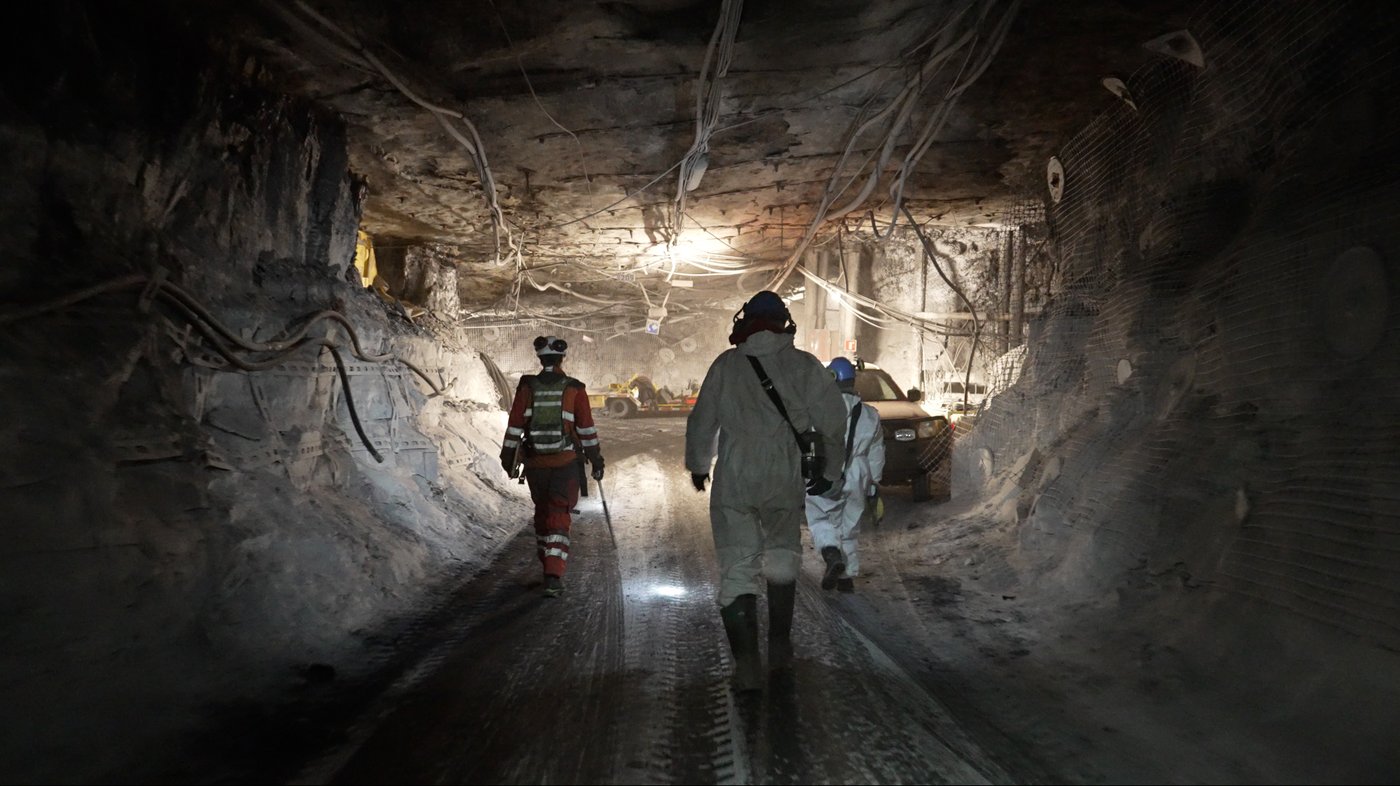
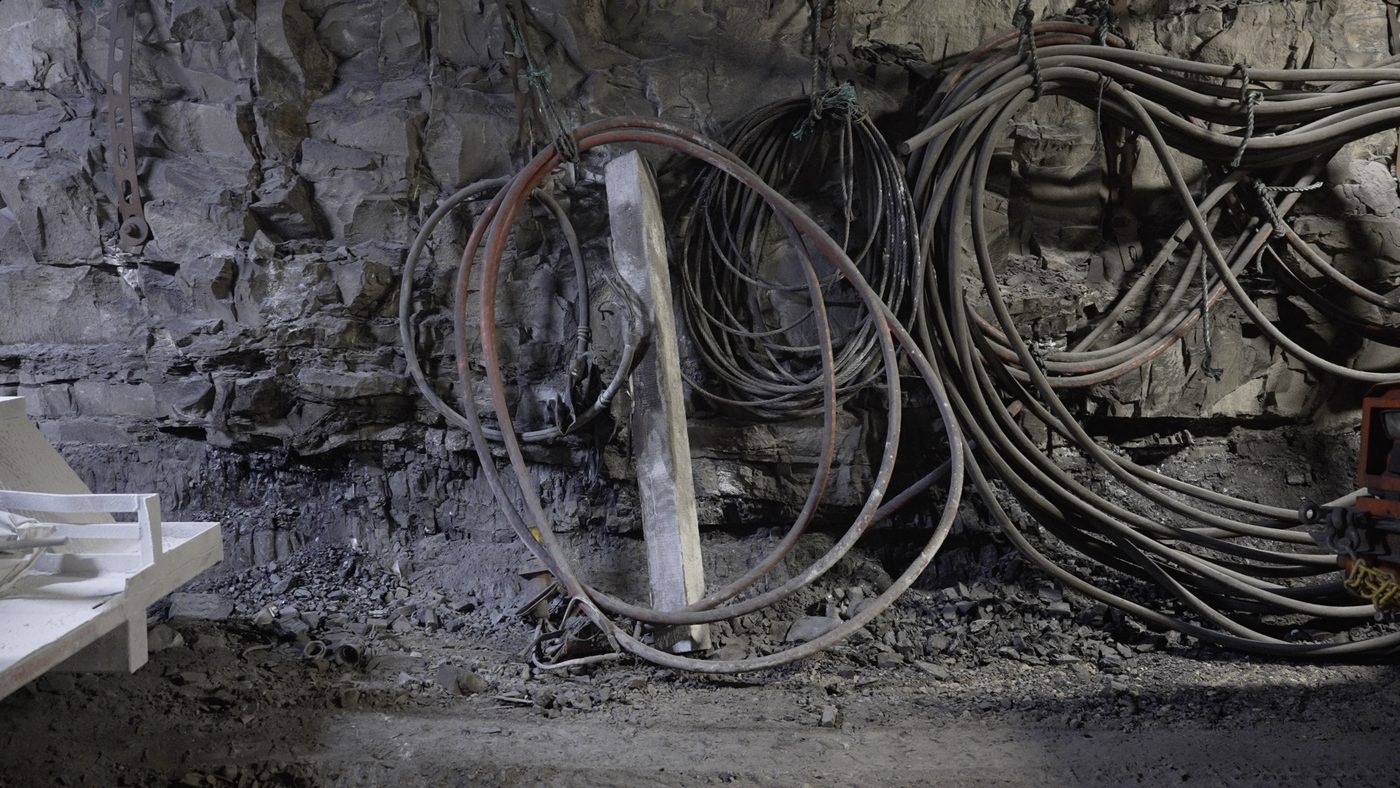
I'm on the Arctic archipelago of Svalbard, inside Gruve 7, the northernmost coal mine in the world.1 Outside, the air temperature is well below freezing, but deep within the mine, the air is nearly warm. I'm accompanied by the mine's geologist, and he directs my attention to a line of sediment staining the tunnel walls, evidence of the occasional floods caused by a rapidly melting glacier nearly 500 meters above us at the surface. Fossilized roots are occasionally visible in the mine ceiling. I'm told they are remnants of the ancient wetlands that formed this coal seam roughly 60 million years in the past.2 My respirator filters the coal dust suspended in the air. I can feel the rhythm of machines shattering rock, vibrations transmitted along geological strata.
1 Global Energy Monitor, "Global Coal Mine Tracker (map)," accessed October 1, 2025, https://globalenergymonitor.org/projects/global-coal-mine-tracker/tracker-map/.
2 Peter K. Swindles et al., "A 61-Million-Year-Old Record of Arctic Vegetation and Wildfire Activity from the Paleocene Coal-Bearing Strata of Svalbard," Climate of the Past 21 (2025): 2133--2154, https://doi.org/10.5194/cp-21-2133-2025.
After years of delays, Gruve 7 was officially decommissioned on June 30, 2025.3 A coal-fired power plant in the nearby settlement of Longyearbyen shut down two years prior. Since then, a new, temporary facility burns imported diesel to provide electricity and heating to this town of around 2,500 inhabitants.4 Commercial coal mining operations in Svalbard began in 1899, and—before being supplanted by eco-tourism and cruise ships—this industry was central to the economy of this remote Norwegian settlement.5 In its final years, the mine produced only its highest-grade material: no longer thermal coal for local power generation, but high-grade industrial coal for export. Both the mine closure and the transition to diesel fuel were presented by local authorities as part of a broader initiative to reduce the carbon footprint of an Arctic community that feels inherently unsustainable. My visit to Gruve 7 takes place during the polar night of late November, a time of intense cold and permanent darkness. Heating and light are needed 24 hours a day, but the closure of Gruve 7 also means that the peak energy loads of Longyearbyen's grid are now considerably lower than they used to be.
3 "Norges siste kullgruve," Verdens Gang (VG), June 30, 2025, https://www.vg.no/nyheter/i/wgoVe1/norges-siste-kullgruve.
4 "World's Northernmost Coal Power Plant Shuts Down," The Barents Observer, October 19, 2023, https://www.thebarentsobserver.com/arctic/worlds-northernmost-coal-power-plant-shuts-down/119449.
5 "Industrial Heritage Sites in Spitsbergen (Svalbard)," Arctic Archaeology & Heritage, 2016, https://www.sciencedirect.com/science/article/pii/S1873965216300470?via%3Dihub
Halfway between Gruve 7 and Longyearbyen, I see four pyramids set some distance off the road. They are small, dark, plywood. I'm with Snorre Olaussen, one of the lead researchers from the Longyearbyen CO₂ Lab. Established in 2006 and led by the University Centre in Svalbard, the lab is Norway's only attempt to store carbon underground in the High Arctic. The project was intended as a pilot for a full-scale carbon capture and storage (CCS) operation that would have captured CO₂ from the community's coal-fired power plant and injected it into local geological formations for permanent sequestration.6
6 Kim Senger et al., "Longyearbyen CO₂ Lab Project—From a Vision of a CO₂-Neutral Svalbard to a Geoscience Data Eldorado," Arctic Science 11 (2024): 1--26, https://doi.org/10.1139/as-2024-0019.
Inside each pyramid, a small metal cap marks the location of a test well drilled during the project's active years. There are others around the island, but the ones Snorre shows me here were among the most promising. Each corresponds to a question once put to the geology below: whether the formation could receive injected fluid, whether the seal would hold, and whether storage could be sustained across the timescales required to be effective. The answers were complex and full of qualifiers. Snorre calls this an "unconventional" reservoir. He mentions shale gas, methane pockets in the permafrost and other constraints encountered during drilling. In one of his published studies, early water-injection tests revealed low permeability in the Triassic sandstone strata, with fractures gradually opening and growing under injection.7
7 Alvar Braathen et al., "The Longyearbyen CO₂ Lab of Svalbard, Norway—Initial Assessment of the Geological Conditions for CO₂ Sequestration," Norwegian Journal of Geology 92, no. 4 (2012): 353--376.
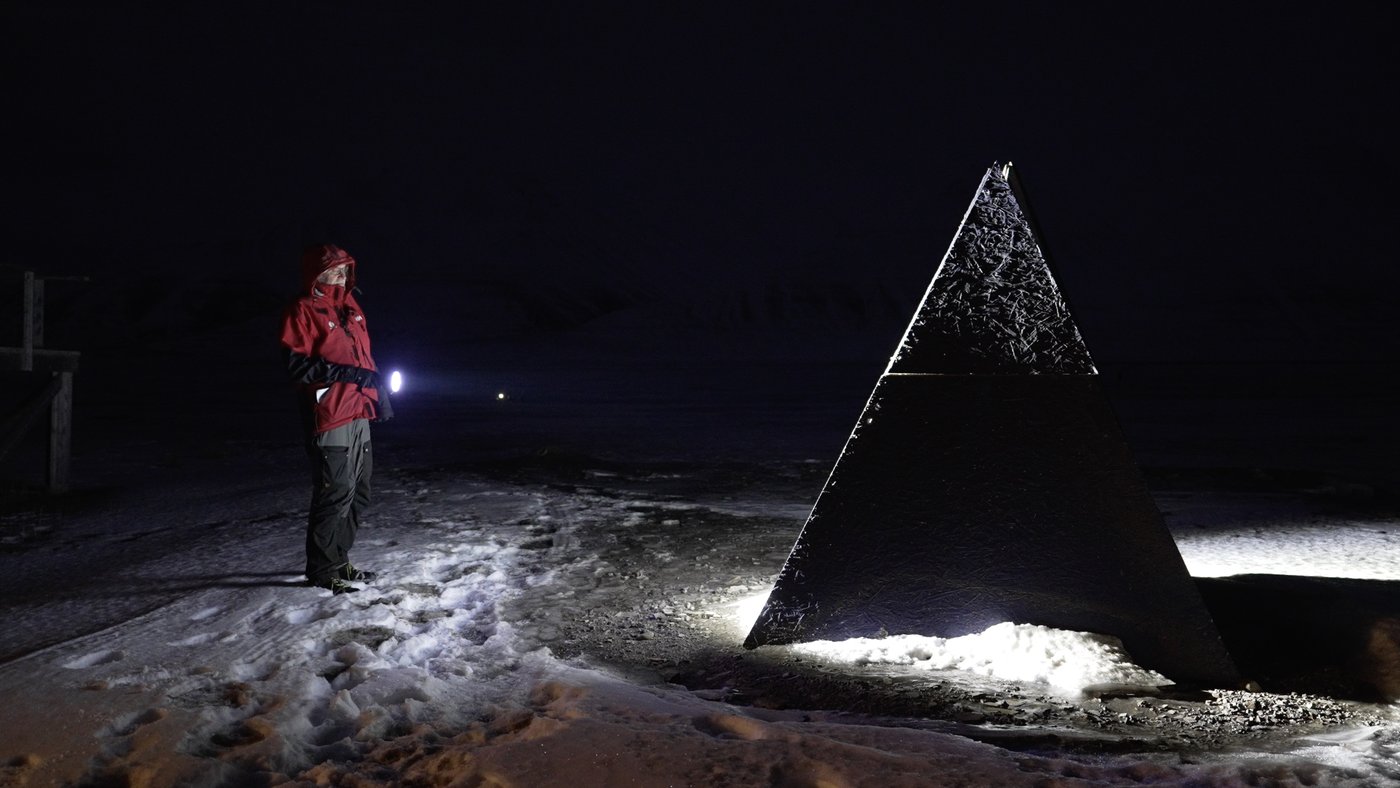
With additional research and investment, the project might have proven viable. However, the high cost of installing a CO₂ capture unit on the coal-fired power plant—combined with the political decision to decommission that plant in 2023, thereby eliminating the only local point source of CO₂—ultimately led to the project's suspension.8 No CO₂ was ever injected here, but Snorre still believes that the project would have succeeded. The miners' jobs could have been saved. Among the pyramids, I see pipe and other drilling equipment, stacked and arranged as if waiting to be deployed for the project's next phase. The central question—whether carbon could be contained with sufficient reliability to sustain a larger operation—remains open to interpretation.
8 Kim Senger, Peter Betlem, Alvar Braathen, Tom Birchall, Andrew Hodson, Sten-Andreas Grundvåg, Snorre Olaussen, and Gunnar Sand, "Longyearbyen CO₂ Lab Project—Data and Research Synthesis from the High Arctic," paper presented at the 17th Greenhouse Gas Control Technologies Conference (GHGT-17), October 20--24, 2024, SSRN, https://papers.ssrn.com/sol3/papers.cfm?abstract_id=5010193.
Across the North Sea, into East Asian fabrication yards, and through the peridotite formations of the Arabian Peninsula, the projects that follow attempt to organize uncertainty through management. Each site becomes credible as a place of carbon storage not only through its geology, but through the systems assembled around it: ships, terminals, surveys, surveillance, capital, and the infrastructures that allow carbon to be followed beyond the point of capture.
2: THE NORTH SEA
The rollout of the Sleipner CCS project in 1996—the world's first commercial CO₂ injection operation—is often taken as the starting point for this history. Built by Statoil (now Equinor) in response to the Norwegian CO₂ tax introduced in 1991, the project captures carbon dioxide from natural gas extracted from the Sleipner Øst field and injects it into the Utsira Sand Formation beneath the North Sea.9 Hydrocarbons are transported via undersea pipeline to the Norwegian mainland for processing, while excess CO₂—separated from the gas stream to meet commercial specifications—is redirected downward into the subsurface. And so, the intervention reorganizes existing extractive flows rather than eliminating them.
9 "Sleipner," MIT Carbon Sequestration Program, accessed October 17, 2025, https://sequestration.mit.edu/tools/projects/sleipner.html.
Equinor estimates that approximately 20 million tons of CO₂ have been sequestered at Sleipner over the last thirty years.10 Although reported injection volumes have been subject to revision, the project is nevertheless cited as proof that large-scale storage is feasible, and subsequent projects have built upon its underlying logic. In the Barents Sea at Snøhvit, early operations encountered unexpected pressure buildup in the planned storage reservoir, and CO₂ injection was rerouted to a separate formation with more favorable characteristics.11 At In Salah in Algeria, satellite monitoring revealed ground deformation associated with injection, and the project was halted.12
10 Equinor, "Reducing Emissions from Sleipner and Gudrun," April 4, 2024, https://www.equinor.com/news/20240404-reducing-emissions-from-sleipner-and-gudrun.
11 James C. White et al., "Seismic Amplitude Analysis Provides New Insights into CO₂ Plume Morphology at the Snøhvit CO₂ Injection Operation," International Journal of Greenhouse Gas Control 79 (2018): 313--322, https://doi.org/10.1016/j.ijggc.2018.05.024.
12 Joshua White et al., "Geomechanical Behavior of the Reservoir and Caprock System at the In Salah CO₂ Storage Project," Proceedings of the National Academy of Sciences 111, no. 24 (2014): 8747--8752, https://doi.org/10.1073/pnas.1316465111.
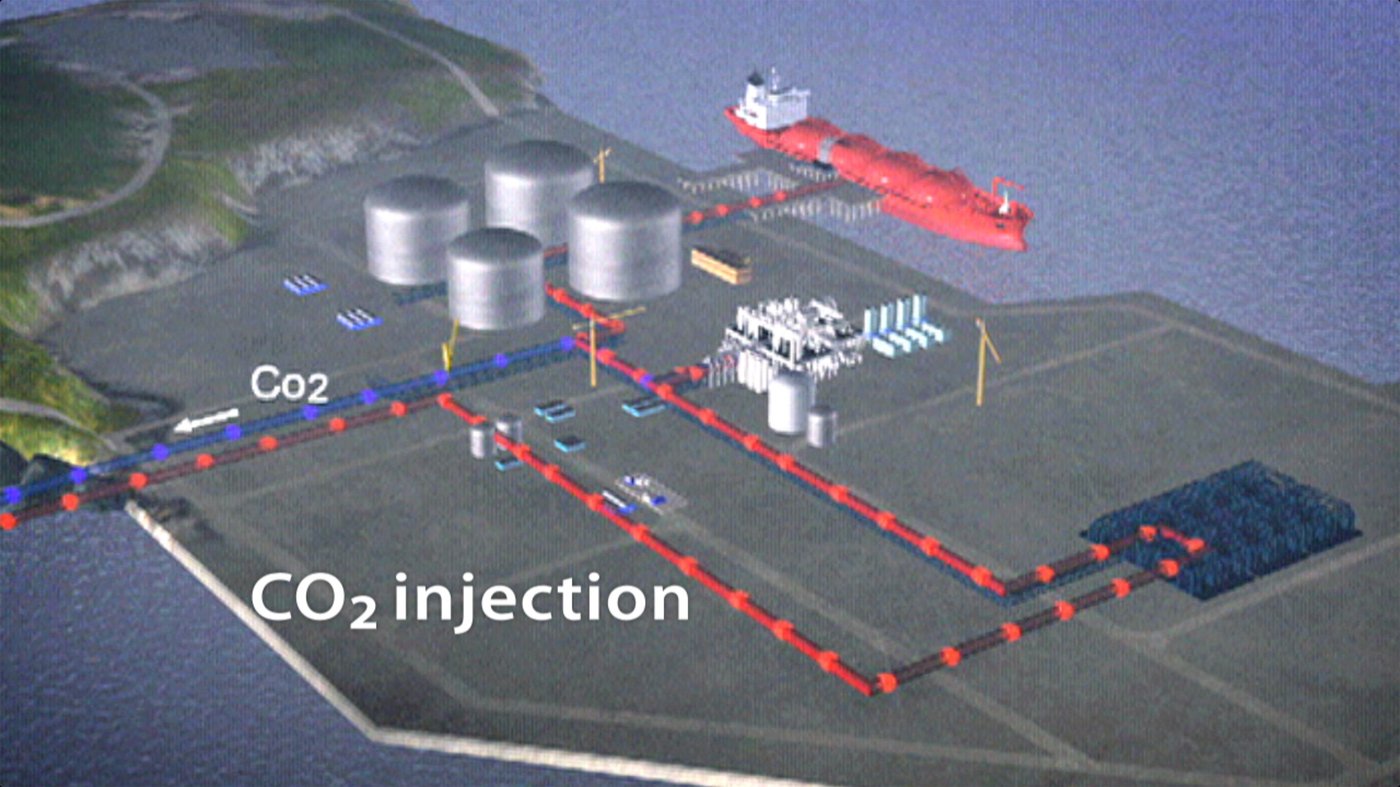
Across these projects, the underlying geological uncertainty remains. What changes is how that uncertainty is modeled, managed, and held within tolerances that allow injection to proceed. We know that carbon can be stored underground, but the parameters required to sustain long-term industrial-scale operations are less clear. The challenge, then, is to determine how CCS technology can be deployed across the heterogeneous conditions of the subsurface.
3: THE NORTHERN LIGHTS TERMINAL
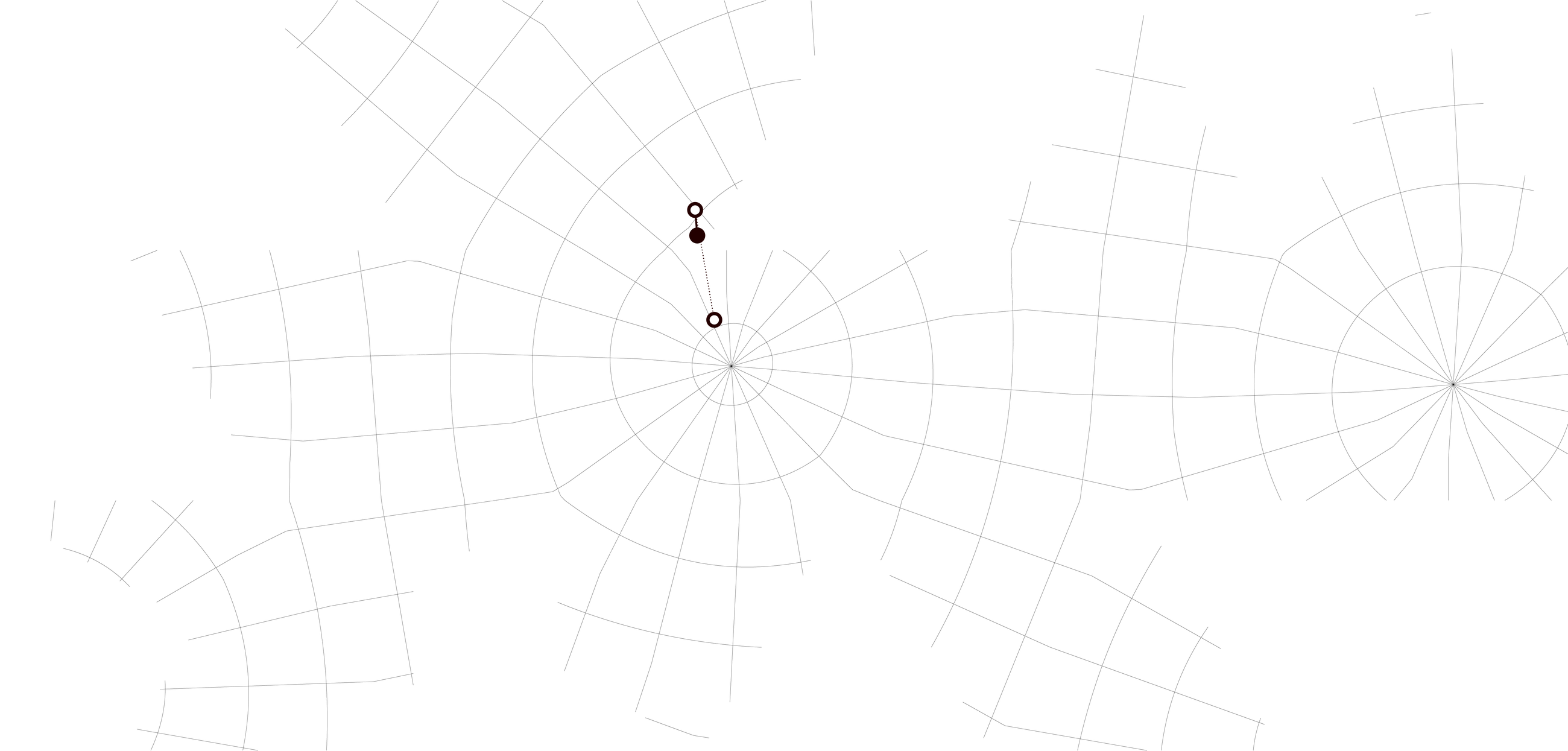
Northern Lights is one effort to address this problem at industrial scale, a joint venture conceived in 2018 between Equinor, Shell, and TotalEnergies and funded by the Norwegian state through the so-called "Longship" program. The project describes itself as the world's first "open-access" CO₂ transport and storage infrastructure,13 designed to receive captured carbon from multiple industrial sources across Europe. Its premise is simple but rhetorically powerful: carbon dioxide captured from industrial emitters in Norway and elsewhere in Europe will be liquefied and shipped to a newly constructed holding facility along the western Norwegian coast before being injected beneath the North Sea into the Aurora reservoir.
13 Northern Lights, Accelerating Decarbonisation, accessed September 1, 2026, Northern Lights CCS.
Embedded within the permeable sandstone of the Johansen Formation, the Aurora reservoir is sealed by the low-permeability shale of the Drake Formation and well over two kilometers of overburden.14 These are often presented as ideal parameters for storage, and yet the project is defined just as much by its limits: the east--west trending Aurora Fault Complex, secondary faults identified in seismic data, and the requirement that injection pressure remain below 16.5 MPa to avoid fracturing the caprock.15 Even here, under optimal conditions, storage depends upon continuous monitoring of the CO₂ both before and after it enters the subsurface.
14 Nora Holden et al., "Structural Characterization and Across-Fault Seal Assessment of the Aurora CO₂ Storage Site, Northern North Sea," Petroleum Geoscience 28, no. 4 (2022), https://doi.org/10.1144/petgeo2022-036.
15 Miljødirektoratet (Norwegian Environment Agency), Tillatelse etter forurensningsloven til injeksjon og lagring av CO₂ på Aurorafeltet, Northern Lights JV DA, April 30, 2025, tillatelsesnummer 2025.0379.T, sec. 3.2, https://www.miljodirektoratet.no/globalassets/aktuelt/fagmeldinger/2025/mai/northern-lights---co2-lagringstillatelse-3004252.pdf.
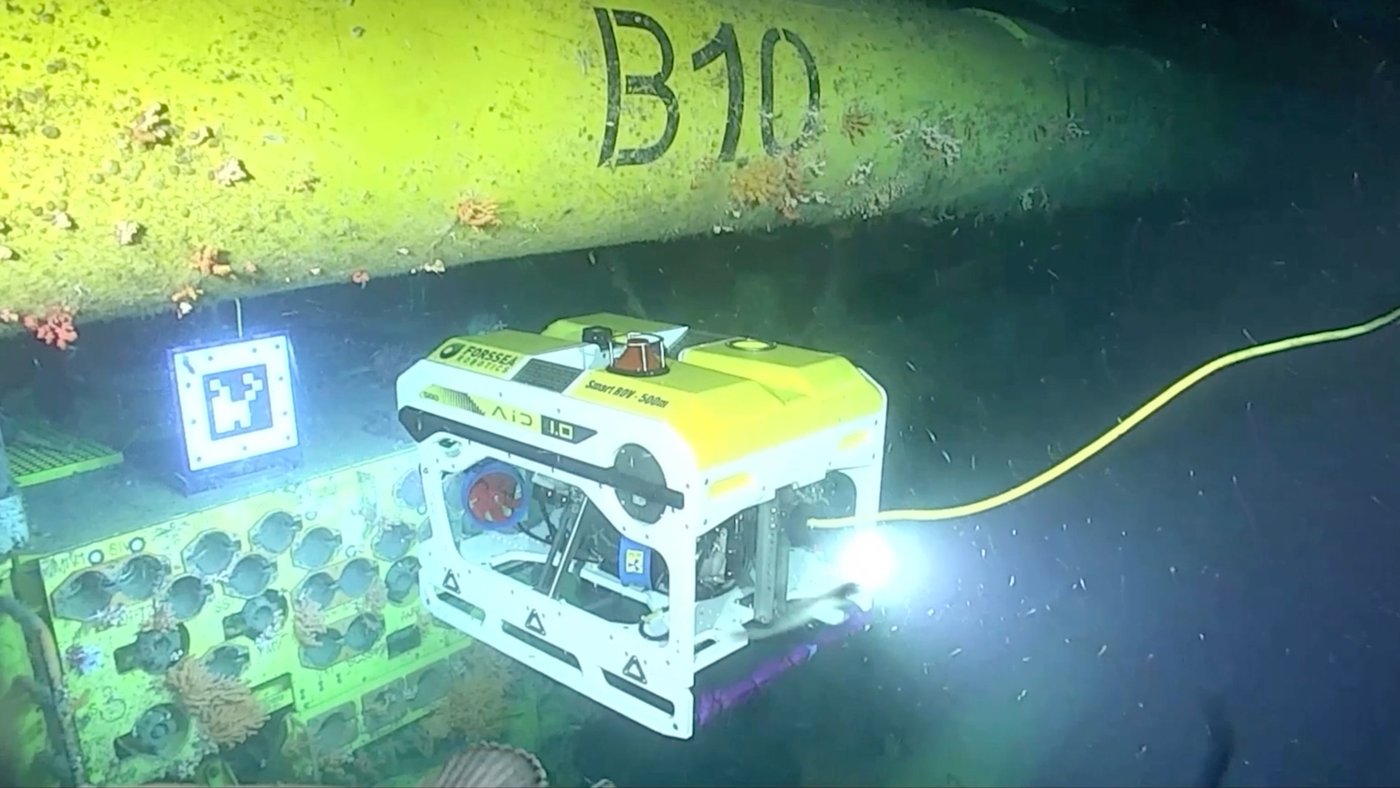
Building on the monitoring practices established at Sleipner, Aurora requires three-dimensional seismic surveys at specific injection thresholds—5, 15, 25, and 37.5 million tons16—alongside continuous measurement of pressure, temperature, and flow at the wellhead. These measurements translate subsurface behavior into signals that can be compared against model predictions and refined accordingly. If those signals suggest possible leakage, a secondary monitoring system activates: inspection of the seabed from remotely operated submersibles, bubble-detection surveys and more. And yet, the plume itself is never directly observed. The signals are proxies that require interpretation.
16 Ibid.
These details matter because they point toward the fragility of "permanence" as an engineering concept. Containment is probabilistic, not absolute, and much of the scientific literature around the Aurora storage site reads like a slow negotiation between idealized models of subsurface behavior and the unruly, abstracted reality of fluids and faults. What the project offers, however, is reassurance—emotionally absolute where the engineering cannot be. It suggests that the fossil energy infrastructure of the North Sea can be inverted into an infrastructure of repair compatible with the realities of the climate crisis.
And so, it is no accident that the undersea pipeline that carries CO₂ to Aurora follows the same route used for oil and gas extraction, and Equinor's workforce at Northern Lights largely overlaps with its offshore oil teams. In this choreography of reversal, the same technicians who once brought—and still bring—hydrocarbons to the surface are now being trained to send carbon downward, along infrastructure inherited from the petroleum industry. The flow has been reversed, but much of the institutional and economic apparatus remains intact, and it's difficult to not feel a degree of enthusiasm as fossil energy workers speak to me about their commitment toward mitigating the impacts of their industry.
Although the physical operations on site are mundane (transport, compression, injection), the public-facing experience of Northern Lights largely delivers on the sense of technological possibility outlined in the project's marketing. Promotional video and images of the project show a dramatic glaciated landscape of pristine coastal heath framed by stainless steel tanks and deep ocean waters. At the on-site visitor's center, the floor is tiled with a diagram of the reservoir in the North Sea—its layers mapped and fixed beneath your feet, as if the formation itself had already been fully known.
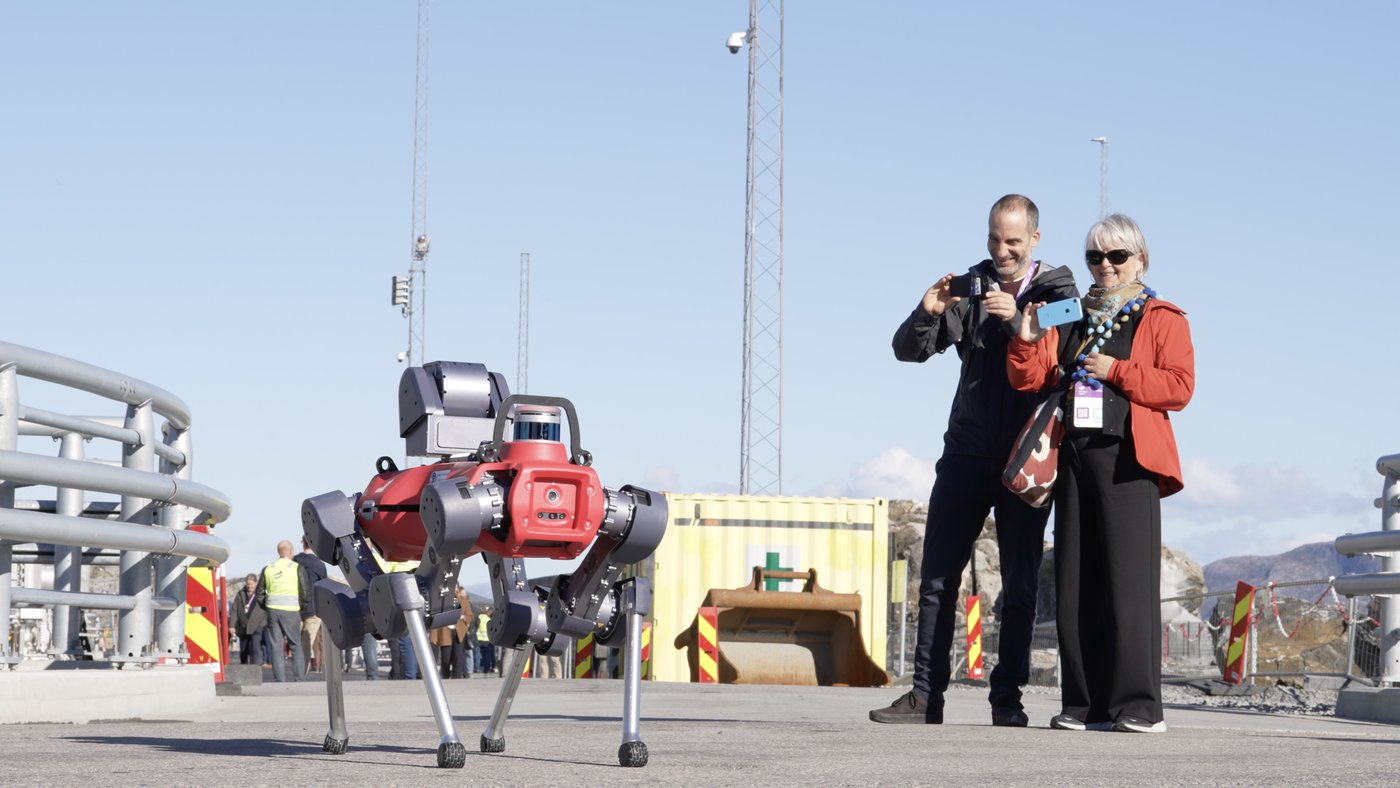
On the day of the terminal's inauguration, the site is opened to the public. Locals wander between the structures. An Equinor-branded robotic inspection dog trots across the pavement, operated by two friendly employees in high-visibility gear; people crouch beside it, pretending to pet it. Three women pose for photographs with a large purple cube labeled "1 tonne CO₂," while a children's choir performs "A Million Dreams" from The Greatest Showman. Later, a marching band in parade formation leads a single white tanker truck toward the silver storage tanks inside the facility. Norway's Minister of Energy leads a countdown, and Northern Lights is declared operational. Just down the road, a billboard reads "Energiparken: Fremtidens klimaløsninger med CO₂ og H₂" ("The Energy Park: Future Climate Solutions with CO₂ and H₂"). A large photorealistic rendering shows what will be built here, but right now the site itself is bare rock, tree stumps, some moss.
The effect is one of completeness. Each stage—capture, transport, storage—seems already accounted for. This entire industrial operation feels benign to the point of benevolence, evidence of an uncanny present in which Equinor, Shell, and TotalEnergies leverage their considerable resources and expertise to address runaway global emissions. It's difficult to reconcile this apparent reality with the scientific analyses of the caprock's Shale Gouge Ratio, porosity distribution, and fault transmissivity, but even those pragmatic considerations feel unwarranted. I want to believe that Northern Lights offers a viable, permanent solution to the problem of fossil fuels, and when I speak with the operators of the facility, I genuinely trust them. It's a bizarre sensation.
That trust does not emerge from the geology, which remains abstract and inaccessible, but from the staging that surrounds it: the aesthetic, administrative, and perceptual work through which the geology, engineering, and chemistry—all of them real—become operable. The chain must cohere as image before it can cohere in matter.
4: DALIAN
If the North Sea represents the administrative face of Northern European "carbon permanence," its logistical counterpart lies in East Asia.
In November 2024, the Dalian Shipbuilding Industry Company (DSIC) completed the first large-scale liquid CO₂ carrier built specifically for an industrial CCS operation at their headquarters in northeast China.17 I arrive in Dalian for the commissioning of this vessel, the Northern Pioneer. From a distance, it reads almost as a graphic—a smooth purple hull, clean lines, its surface marked by oversized lettering that announces its purpose directly: CO₂ CARRIER. I have seen this image many times: on the Northern Lights website, in press materials, in promotional video, and in the shipyard, in steel, the image holds.
17 "First Liquid CO₂ Carrier for CCS Ready for Delivery in China," OSH Marine, December 1, 2024, https://oshmarine.com/2024/12/01/first-liquid-co2-carrier-for-ccs-ready-for-delivery-in-china/.
The Northern Pioneer is critical to the success of the Northern Lights project: it will be the first in a fleet of ships transporting industrial CO₂ from across Europe to the project's holding facility along the Norwegian coast. It is capable of holding approximately 7,500 cubic meters of liquid CO₂ at --35°C and 19 bar pressure,18 but in person, that specificity feels thin. In structural terms, the ship is essentially an adaptation of a conventional LPG carrier, modified for the particular requirements of transporting liquid CO₂. Without its cargo and purpose written directly on its hull, it would be nearly indistinguishable from the various cargo ships and oil tankers taking shape in the nearby dry docks.
18 "Vessel Review: Northern Pioneer—Gas Carrier to Support Norwegian Carbon Capture and Storage Project," Baird Maritime, January 2, 2025, https://www.bairdmaritime.com/shipping/gas/vessel-review-northern-pioneer-gas-carrier-to-support-norwegian-carbon-capture-and-storage-project.
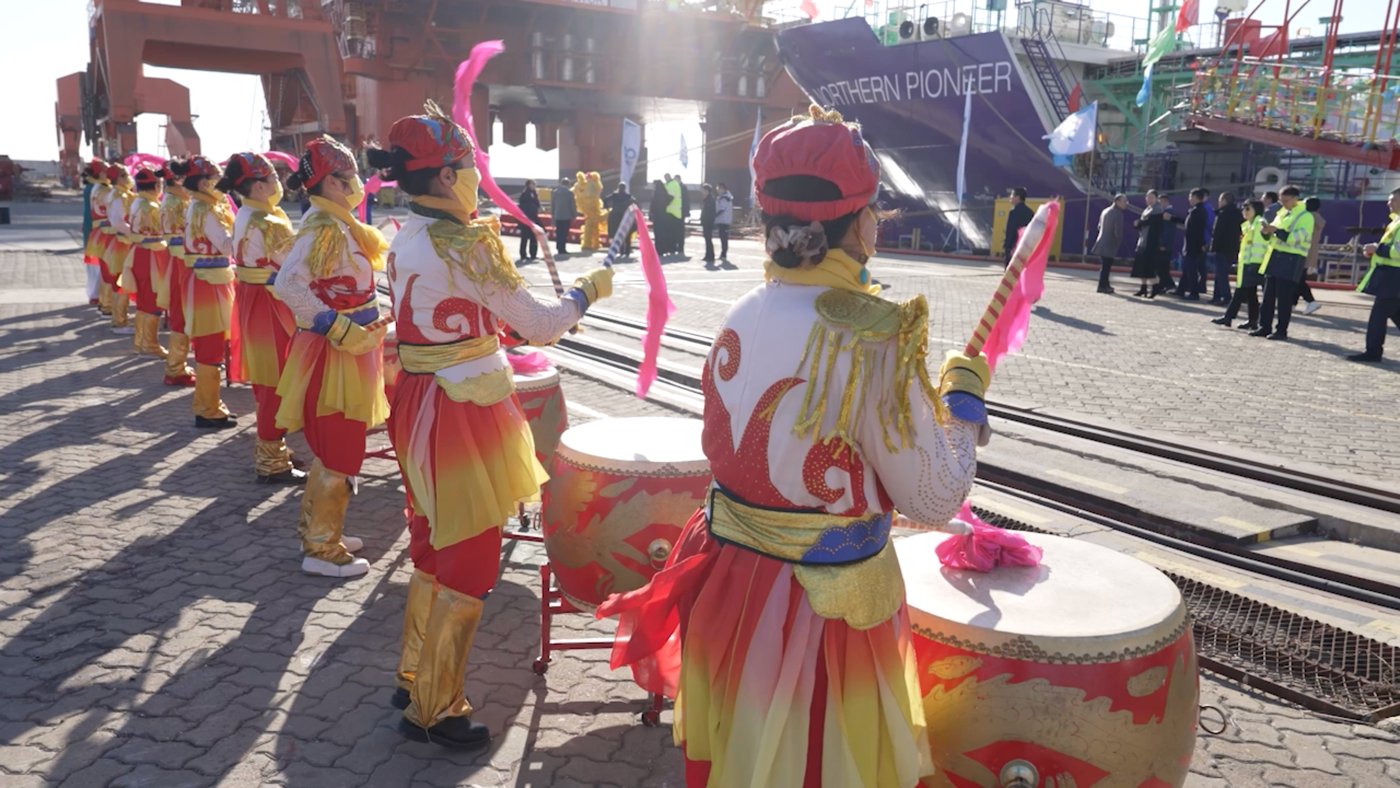
The commissioning of the Northern Pioneer proceeds through a series of tightly structured moments. A drumline forms on the quay in front of the hull: twelve women in embroidered red and gold costumes. Pink silk ribbons hanging from their drumsticks, pale yellow surgical masks over their faces. They begin their performance, and officials and executives gather near a temporary stage. Speeches follow—first in Mandarin, then in English through headsets—each describing the vessel as a completed link in a fully operational system of capture, transport, and storage. Two dragon dancers, one yellow and one red, move toward the assembled VIPs. The yellow dragon snaps once into the face of a middle-aged European executive. He does not smile. Journalists move into position, cameras raised, as the ship is repeatedly framed against the water and the assembled audience of dignitaries.
Leaving the ceremony on the quay behind, I make my way deeper into the vessel, where workers in blue coveralls are still tightening fittings, adjusting valves, and finishing sections of pipework as guests circulate onboard. Beneath the decorated railings and temporary ribbons, the ship remains partially assembled, its systems still being completed by hand.
This alignment between description and operation—between an apparatus as it is presented and as it comes into being—corresponds to what Gökçe Günel describes as a "provisional fix": a set of technical and logistical arrangements that transform carbon dioxide from waste into commodity without fundamentally altering the economic and institutional structures that produce it.19
19 Gökçe Günel, "What Is Carbon Dioxide: When Is Carbon Dioxide," PoLAR: Political and Legal Anthropology Review 39, no. 1 (2016): 35.
In Dalian, that arrangement is visible in the vessel itself and in the network of actors that sustain it across jurisdictions, industries, and various forms of expertise. The Northern Pioneer is constructed in China, developed under the leadership of Equinor with participation from Shell. It was financed through Norwegian state support derived in large part from offshore petroleum revenues, and operated by Kawasaki Kisen Kaisha, Ltd., a shipping company whose fleet continues to transport fossil fuels alongside emerging carbon cargoes. Even as this infrastructure is built out to transport and sequester carbon, the Dalian Shipbuilding Industry Company continues to produce offshore oil and gas platforms and LNG tankers. The arrangement persists in part because it holds together competing demands: reducing emissions, protecting industrial production, and repurposing those same systems as instruments of mitigation.
5: THE HAJAR MOUNTAINS
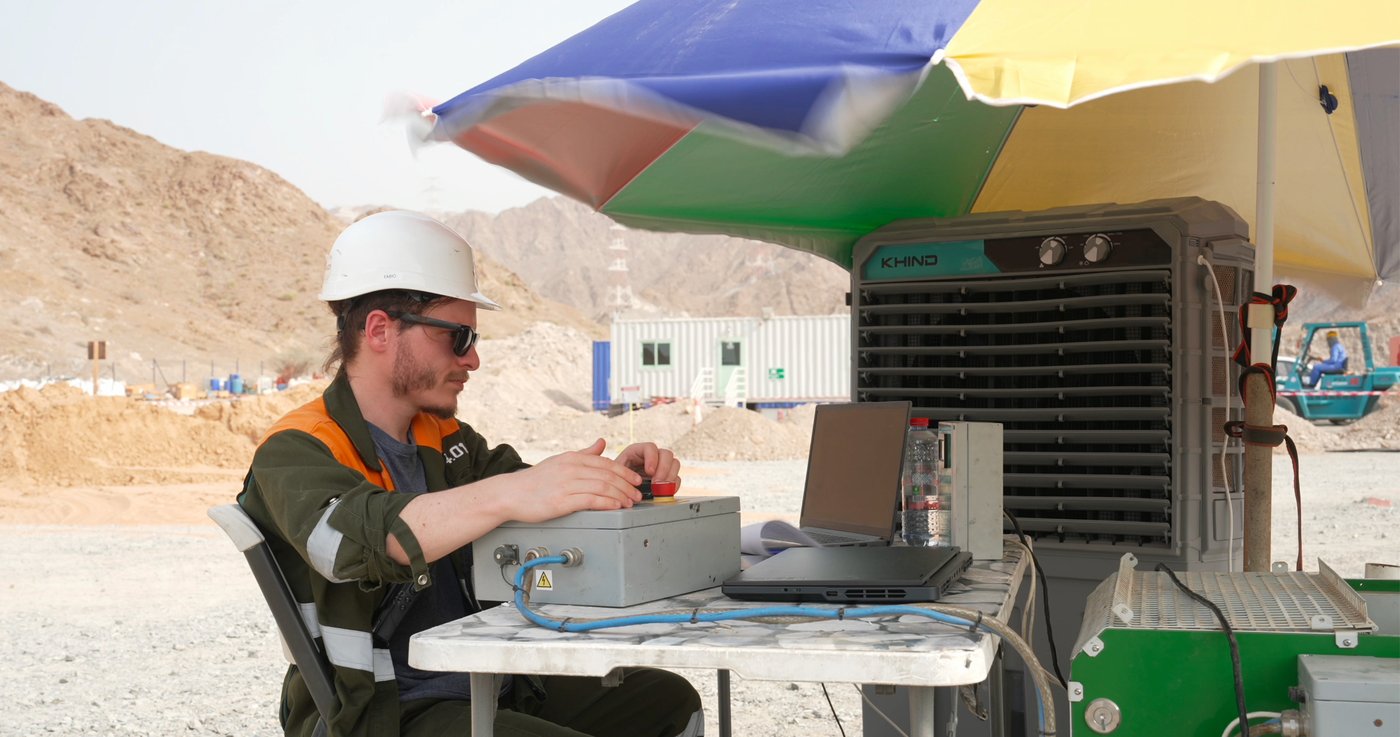
Along the eastern extent of the Arabian Peninsula, the 44.01 project is pursuing a different, mineral model of permanence. I arrive at the site along a dirt road that runs through a wide, stony wadi at the base of the Hajar Mountains. Workers move between components, checking valves and fittings, while a temporary workstation—a table, a laptop, cables running into a control box—sits out in the open sun. At the edge of the installation, warning signs mark the system: HIGH PRESSURE, NO SMOKING. In the distance, a small cluster of equipment sits against the slope—pipes, tanks, steel framing supporting a series of pressure vessels—its scale diminished by the surrounding geology.
The company—named for the molecular weight of CO₂—injects water supersaturated with carbon dioxide into peridotite formations, utilizing a naturally occurring weathering process that converts the molecule into solid carbonate. The rock here, formed ninety-five million years ago at the bottom of an ancient sea, is one of the few places on Earth where mantle material is exposed at the surface.20 The staff geologist, Fabio, walks me to a native rock face and points to a pale white vein running through it. The mark is so faint I would have missed it entirely had he not shown me. This, he tells me, is what mineralized carbon looks like. I ask if I can touch it. He nods. I run my finger along its surface. The rock is warm from the sun, the white sections dry and fragile. It does not look like anything that would matter.
20 Peter B. Kelemen and J.-M. Matter, "In Situ Carbonation of Peridotite for CO₂ Storage," Proceedings of the National Academy of Sciences 105, no. 45 (2008): 17295--17300, https://doi.org/10.1073/pnas.0805794105.
The process occurs naturally in peridotite; 44.01's contribution is to accelerate it, compressing a transformation that can unfold over geological timescales into a matter of weeks. 21 In doing so, storage and material alteration collapse into the same operation. The injected CO₂ reacts with magnesium-rich minerals in the peridotite, precipitating as solid carbonate and becoming part of the rock's structure.
21 "ADNOC and 44.01 to Scale Up Carbon-to-Rock Project Following Successful Pilot," ADNOC, accessed October 17, 2025, https://adnoc.ae/en/news-and-media/press-releases/2024/adnoc-and-4401-to-scale-up-carbon-torock-project-following-successful-pilot.
At Sleipner and Aurora, CO₂ is injected and stored as a mobile subsurface plume. Mineralization occurs only gradually, so containment depends on geological seals and continued monitoring. The advantage is that the plume remains legible at reservoir scale: repeated 3D and 4D seismic surveys can track its movement and changing distribution through the subsurface. At 44.01, the tradeoff is almost the inverse. Once the injected CO₂ has mineralized, it no longer requires the same kind of ongoing observation, but the transformation is much harder to verify across the reservoir as a whole. With no coherent plume to image, confirmation depends instead on localized geochemical sampling, core analysis, and isotopic tracing. The remaining uncertainty is one of scale: whether injection pressure, water supply, and CO₂ flow can be sustained long enough to mineralize enough carbon to meaningfully reduce atmospheric CO₂.
A row of direct air capture (DAC) units sits exposed to the same heat and dust as the rest of the 44.01 installation. I had expected to see equipment from the Swiss DAC pioneer Climeworks. Instead the machines here are labeled AirCapture, a startup based in the Bay Area. The difference is marginal, but present—an indication that the operation is still being worked out in place. Unlike conventional carbon capture, which captures emissions from a point source—a power plant, a refinery—the DAC units at 44.01 draw CO₂ directly from the ambient air. Here, the atmosphere itself is treated as the reserve. The machines provide CO₂ for mineralization in the peridotite below, but their presence also shifts the logic of the site. The carbon could, in theory, be captured anywhere. The air above is interchangeable. The rock beneath is not.
6: UTAH
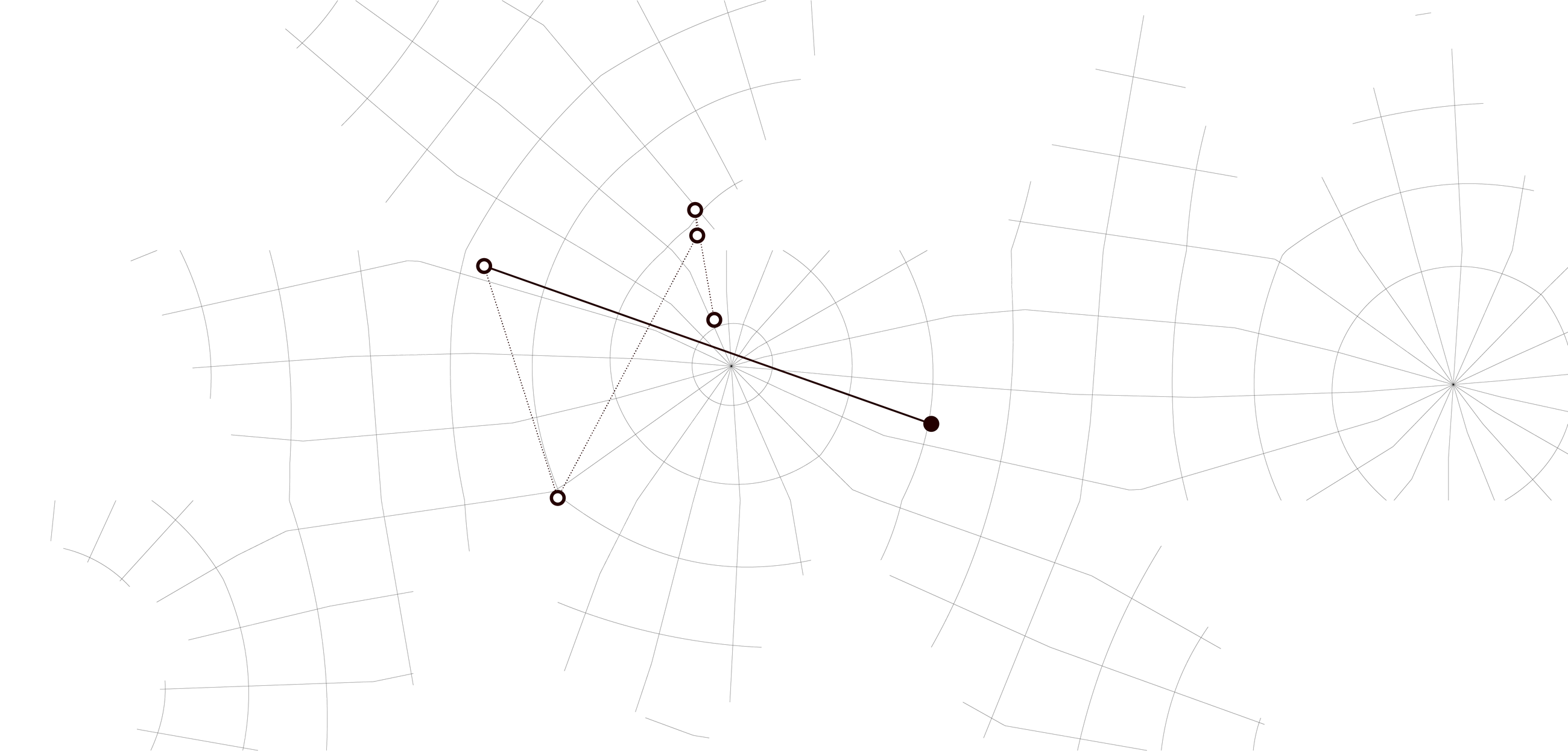
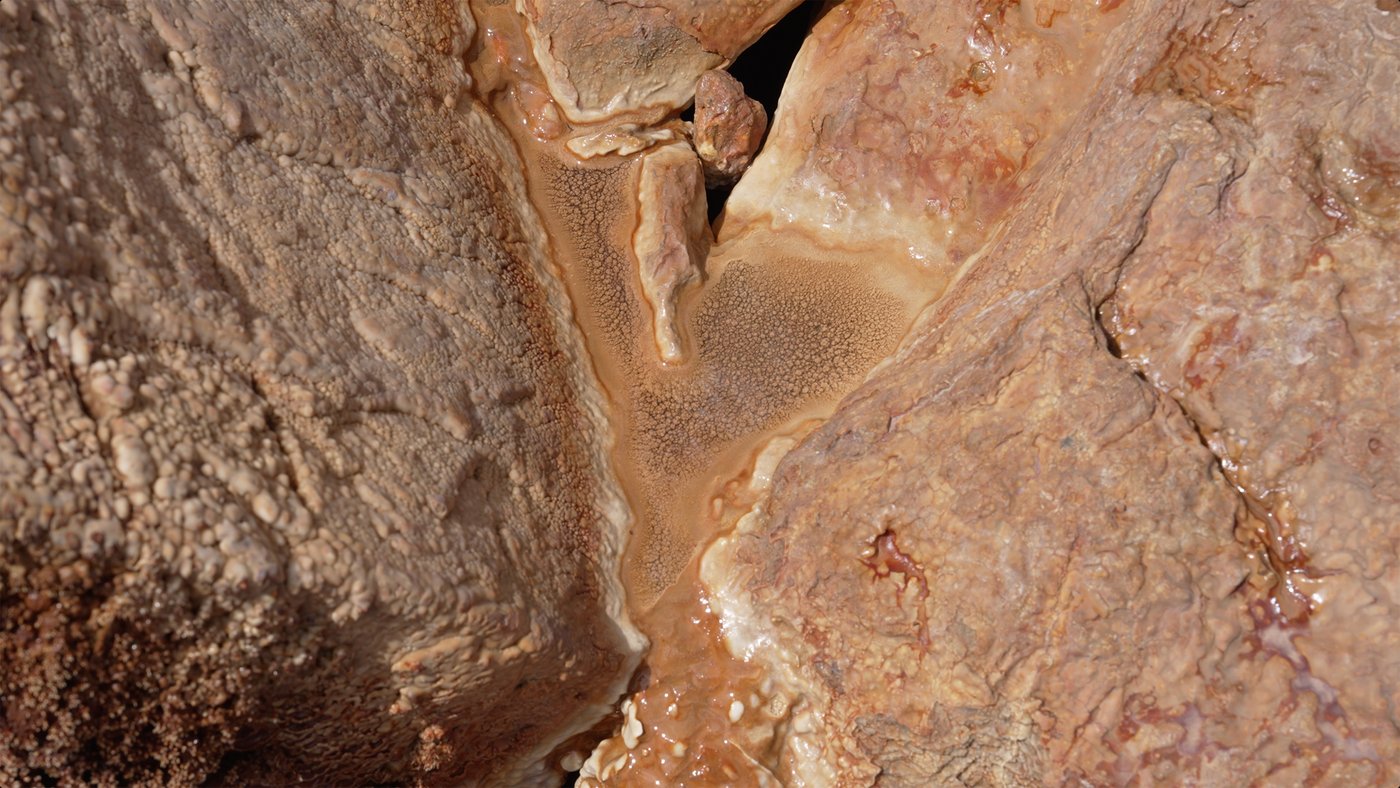
The final node in this sequence lies in a geological accident. Along the Green River in southeastern Utah, a cold-water geyser erupts intermittently, ejecting water and CO₂ in rhythmic bursts. The feature, known as Crystal Geyser, was created in 1936 when wildcat drillers, searching for oil, bored through layers of sandstone and inadvertently tapped a naturally pressurized reservoir of carbon dioxide.22 The resultant release was explosive, and the well was abandoned after the eruption, but the vent remained open, and today the geyser continues to discharge CO₂-charged groundwater whenever the pressure of gas in the borehole exceeds the weight of the groundwater above it.
22 "GeoSights: Crystal Geyser, Grand County, Utah," Utah Geological Survey, accessed September 10, 2025, https://geology.utah.gov/map-pub/survey-notes/geosights/crystal-geyser/?utm_source=chatgpt.com.
I stand beside the dormant geyser in the early afternoon. A faint sound emanates from the borehole and, illuminated by the midday sun, I can see trace emissions of CO₂ distorting the air like a mirage. The release that engineered storage is designed to prevent has been happening here, slowly and continuously, since 1936. A family pulls off the unpaved road that runs adjacent to the site and steps out, looking lost. The father walks toward me, asking if this is, indeed, the geyser. Without waiting for my reply, he leans down and puts his face into the darkness of the borehole. There's nothing there, he declares. The family gets back into their car and drives away. I continue to wait for the geyser to erupt, and this scene repeats itself in variations over the next several hours: a relic of the early fossil frontier that has, by accident, become a preview of its aftermath.
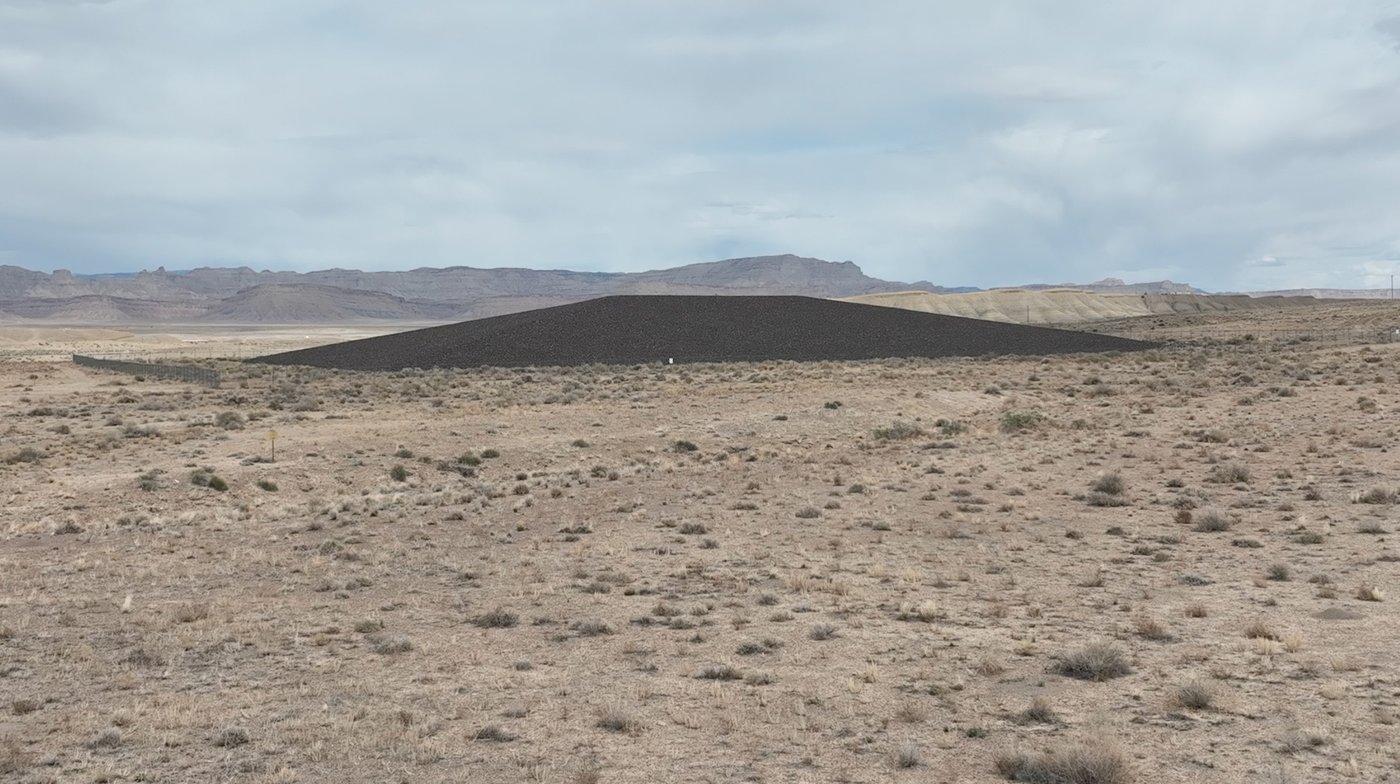
A few kilometers from the geyser, the U.S. Department of Energy's Green River UMTRA site marks a different kind of subsurface governance. Here, the tailings of a defunct uranium mill have been consolidated into a low, armored mound of black gravel—an engineered formation meant to hold its radioactivity beyond the span of collective memory.23 The containment cell transforms waste into a managed geology, a place where the distinction between natural and constructed strata collapses upon itself. Viewed from the nearby Interstate highway, the monolithic black mound reads with the aesthetic clarity of the great works of Land Art in the American West—Smithson, Heizer, Holt—a deliberate scaling of harm against horizon.
23 "Green River, Utah, Disposal Site Fact Sheet," U.S. Department of Energy, August 2022, https://www.energy.gov/sites/default/files/2022-08/GreenRiverFactSheet.pdf?utm_source=chatgpt.com.
If Crystal Geyser reveals something about the volatility of buried carbon, Green River demonstrates the inverse impulse: the will to stabilize matter through indefinite oversight. Both articulate, in different registers, what Karen Pinkus has theorized as the cultural politics of the subsurface—the underground as a site where extraction, burial, fantasy, and projection converge.24 Along the road from Crystal Geyser to Green River, graffiti on a billboard reads "We Used to be Human—Something is Coming." The phrase feels less like a warning than a caption for the landscape itself.
24 Karen Pinkus, Subsurface (Minneapolis: University of Minnesota Press, 2023).
Carbon storage law translates the indefinite materiality of these sites into administrative time. Under the EPA's Class VI rule, geological sequestration projects are organized around injection, post-injection monitoring, and site closure, with a default fifty-year monitoring period before site closure.25 The framework is itself a form of administrative staging—assigning specific durations to processes that would otherwise extend without limit. With injection periods that can span decades, total obligations can extend well beyond half a century—an attempt to formalize, in advance, the long-term containment that sites like Green River's uranium tailings cell must sustain into the far future.
25 The default post-injection site care period under the Class VI rule is fifty years (40 C.F.R. § 146.93(b)), though this period may be shortened if the operator demonstrates storage plume stability.
This is not a uniquely American arrangement. The European Union's CCS Directive follows the same logic, permitting the transfer of responsibility to the state after a defined monitoring period; in cross-border cases—where CO₂ captured in one country is injected beneath another's seabed—long-term liability remains largely unresolved.26 The duration of storage is separated, in advance, from the duration of responsibility.
26 Constantinos Yiallourides, Lennart Westmark, and Alexander Proelss, "Cross-Border CO₂ Transport and Storage Networks in Europe through 'Arrangements' under the London Protocol," Ocean Development and International Law, published online October 16, 2025, https://doi.org/10.1080/00908320.2025.2566714.
Set against the century-long venting of Crystal Geyser and the Green River site's 1998 transition into federal long-term care, these horizons appear as human constructs—administrative thresholds where responsibility begins and ends. The IPCC has concluded that properly selected and managed geological storage sites can isolate CO₂ from the atmosphere over thousand-year timescales.27 Proponents of the regulatory framework argue, however, that responsibility need not extend across that entire timeframe. At well-sited and well-managed facilities, they contend, the risk of leakage declines sufficiently after closure that any remaining liability can be managed through conventional financial instruments—insurance, letters of credit, and surety bonds.28
27 Intergovernmental Panel on Climate Change, IPCC Special Report on Carbon Dioxide Capture and Storage (Cambridge: Cambridge University Press, 2005), chap. 5, https://www.ipcc.ch/report/carbon-dioxide-capture-and-storage/.
28 "Long-Term Liability for Carbon Capture and Storage: Principles and Considerations," Great Plains Institute and Environmental Defense Fund, accessed May 5, 2026, https://carboncaptureready.betterenergy.org/wp-content/uploads/2024/07/Long-Term-Liability.pdf.
And yet, no insurance policy currently written covers more than a fraction of that time horizon. This asymmetry is deliberate: the regulatory framework does not require financial responsibility to persist for as long as the carbon remains underground. Instead, it defines a much shorter horizon of legal exposure, after which statutes of limitation increasingly foreclose the possibility of claims. In practice, the later phases of this framework remain largely untested: no site has yet progressed through post-injection site care to closure.29
29 See U.S. Environmental Protection Agency, "Class VI Wells Used for Geologic Sequestration of Carbon Dioxide," accessed May 6, 2026, https://www.epa.gov/uic/class-vi-wells-used-geologic-sequestration-carbon-dioxide, which documents the limited number of permitted and operational Class VI projects, all of which remain in active injection or early post-injection phases.
Green River makes visible what such a transfer of responsibility looks like in practice. The uranium mill is gone, its private operators no longer responsible for the site, while the contaminated material remains in place under long-term federal government oversight. Inside the mill's remaining structures, graffiti accumulates on the walls—a cartoon face ringed with radiation symbols, captioned "THE PROFESOR" [sic]; a stenciled doorway reading "NEW AREA 51"—cultural sediment that accumulates when industrial liability recedes and the frameworks that once mediated and governed the site fall away.
7: THE RETURN
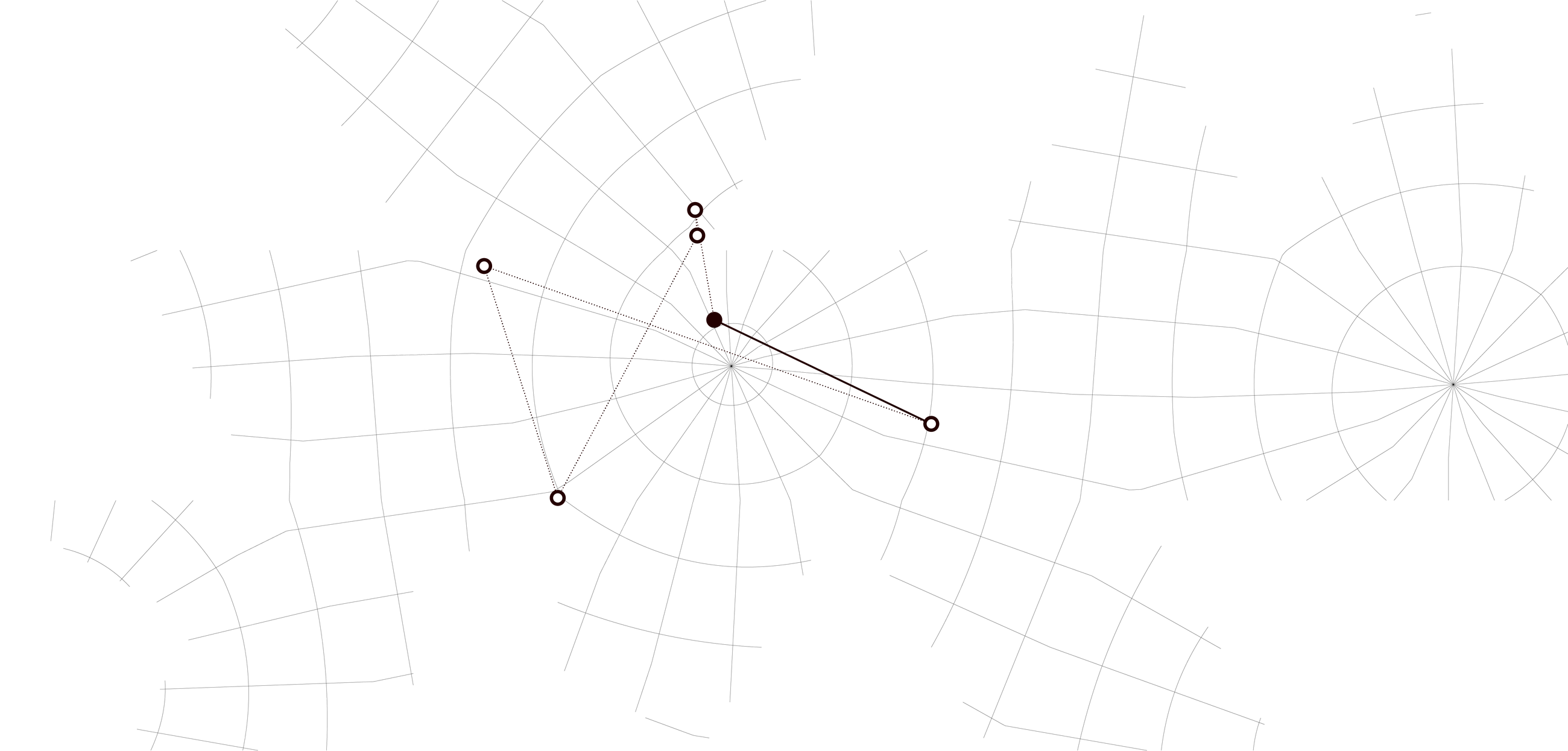
What CCS produces, ultimately, is permanence as an operation deployed and maintained across time. Each site is maintained through measurements, representations, and responsibilities that extend beyond the subsurface. These apparatuses secure not only the longer-term claim of subsurface containment but also the short-term coherence of institutional management. Terminals, ships, surveys and audits, liability frameworks, visitor center floors, drumlines, countdowns, and visualizations of the subsurface all contribute to a distributed system through which carbon is stabilized as an object of governance—logistical, legal, and perceptual at once.
In Svalbard, the logic of this apparatus is suspended. The water will arrive at Gruve 7, as it has before. It will fill the void of the mine, and then it will freeze. No models are updated, no thresholds recalibrated, no responsibility assigned to the material-geological processes assembling themselves in the darkness and cold. This is a different temporal regime. Set against the infrastructures of carbon storage, the contrast clarifies what permanence has come to mean. It is not a property of rock alone, nor a guarantee that can be secured indefinitely. It is a staged alignment between material behavior and institutional confidence, and a decision that this alignment is enough.
Maps: Fuller projection map, Eric Gaba / Wikimedia Commons, CC BY-SA 2.5
Hans Baumann, "Carbon Permanence: The Production of a Geological Promise," Metode (2026), vol. 5 'What if Waste'.
The publication of this essay was supported by the research project Material Ecologies of Design (2025-2026) at the Center for Advanced Study (CAS), funded by the Norwegian Academy of Science and Letters.